
Buying A Forklift 101
Buying a Forklift • Forklifts For Sale
Forklift 101
Forklift Hunter has put together a “Buying a Forklift 101” checklist that every customer should review before
purchasing a forklift from any dealer. Use these points as a guide while you compare equipment. After reviewing
the list, visit our
Forklifts For Sale section to see models fully equipped to meet your
company’s needs.
Forklift Mast
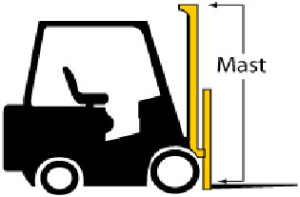
Size matters. When selecting a forklift, always make sure the mast height does not exceed the height of the lowest
door clearance in your facility.
Also take into account the reach/extension of the mast so it meets your needs. If you operate inside box trailers
or trucks, you will need a free-lift mast.
Forklift Tires
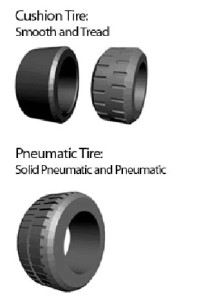
Cushion Tires
Solid rubber compound press-on tires. Available with tread or smooth, and also in white non-marking compounds.
Commonly used on smooth indoor surfaces.
Solid Pneumatic Tires
For use on dirt and gravel surfaces or “soft yard” applications. Solid pneumatic tires do not hold air, making them
ideal for construction or job sites with lots of sharp “flat hazards.”
Pneumatic Tires
Also used on dirt and gravel and soft yards. They provide slightly better traction than solid pneumatics, but
they’re susceptible to flats because they hold air. They cost about half as much as solid pneumatics and offer a
smoother ride.
Forklift Fuel
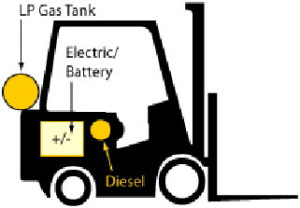
There are four main fuel options to consider when purchasing a forklift:
Diesel
Provides the most torque and power for outdoor construction and job site applications. Most diesel forklifts are
equipped with pneumatic tires.
L.P. Gas
Suitable for outdoor and some indoor use. Most cushion tire forklifts are powered by L.P. Gas. Because emissions
are lower than gasoline, they can be used in certain indoor applications.
Gasoline
Less common, but available. Typically limited to outdoor use because gasoline engines produce higher emissions.
Electric
Designed mainly for indoor use on smooth, hard surfaces. Electric forklifts may be used outdoors when conditions
are dry but should never be used in wet environments. They are ideal for warehouses because they are quiet and
produce no exhaust.
Forklift Forks
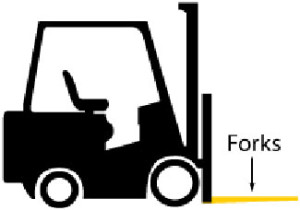
Know your usage. 42″ forks are most common for standard 48″ pallets. Forks should be slightly shorter than
the pallet being moved—forks that stick out the back can damage other shelved products.
Longer forks also increase the forklift’s turning radius, so always choose the shortest forks that safely fit
your application.
Forklift Attachments
Consider attachments that may benefit your operation: side-shifters (move forks right or left), fork positioners
(adjust fork spacing for different loads), and various clamps to handle paper rolls, tires, cartons, and more.
Forklift Hours
Hours on a forklift are the equivalent of miles on a car’s odometer. The more hours, the more wear on the engine,
transmission, and other moving parts. Some brands break out hours (key-on hours, drive motor hours, etc.), which
can help you understand true usage.